Storage as a Service: The New Enterprise Standard

Hilary Fox
CEO
Advoda Technology Advisors
June 1st, 2026
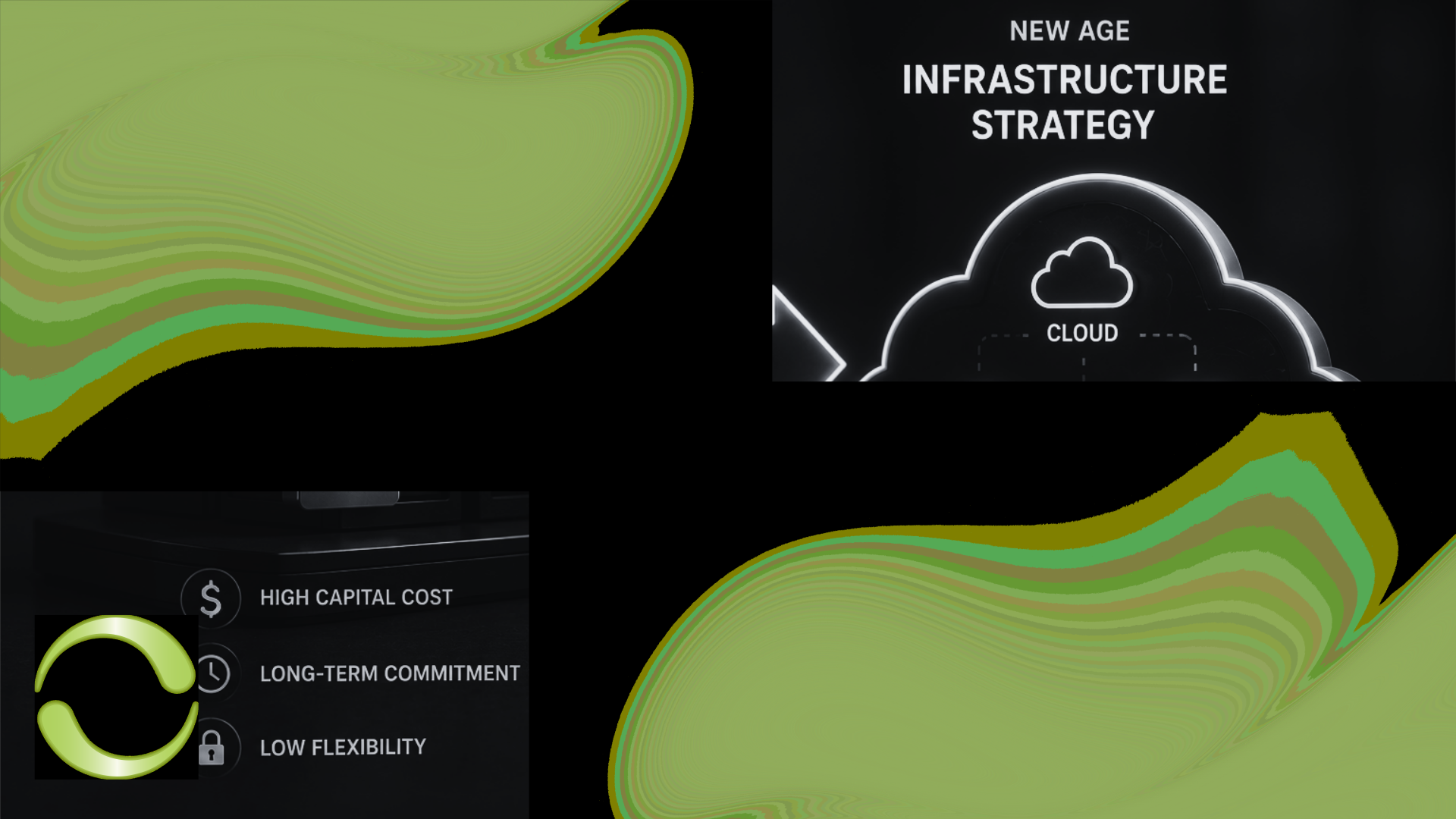
Data is the lifeblood of nearly every organization. As data volumes surge and business models evolve, keeping all that data stored, accessible, and protected has become one of the toughest operational challenges. Traditional storage locked into hardware, capacity limits, refresh cycles, and upfront capital isn’t built for the pace and demands of modern business. That’s why Storage as a Service (STaaS) has changed the picture for enterprises of all kinds.
From Infrastructure Burden to Innovation Catalyst
The shift to “as-a-service” for practically everything is based on something simple: businesses want outcomes, not equipment. STaaS brings enterprise-grade storage to organizations through a flexible and predictable subscription model and it can sit in the cloud, on-prem, or in a hybrid mix.
The real value is in its agility. Storage that expands automatically to match changing workloads eliminates one of the biggest roadblocks in IT. Projects start faster, teams avoid capacity crunches, and budgets stay aligned with actual consumption. Most importantly, IT teams shift attention from maintaining hardware to driving the initiatives that move the business forward.
In recent years, Gartner has repeatedly emphasized this shift, noting that by 2026, most enterprise storage will be consumed as a service rather than purchased outright, a trend driven by flexibility, scalability, and reduced operational complexity (Gartner, “Future of Infrastructure” report).
Financial Flexibility Meets Operational Control
For finance teams, STaaS replaces unpredictable refresh cycles and capital-heavy planning with a more predictable operating expense model. Instead of buying storage you “might” need years from now, you only pay for what you use and expand only when necessary.
Operationally, STaaS providers handle the heavy lifting: uptime, performance tuning, resiliency, and lifecycle management are backed by service-level agreements. That means you gain enterprise-grade availability without increasing the pressure on your internal IT staff.
Intelligent data tiering also trims costs by automatically placing high-performance workloads on the fastest storage while pushing inactive data to lower-cost tiers. No new tools, no new complexity.
A Smarter Way to Manage the Data Lifecycle
Modern STaaS platforms lean heavily on automation and AI to keep storage environments running efficiently. Machine learning tools continually analyze how data is accessed and relocate it to the most appropriate tier or environment—balancing cost, speed, and compliance without manual oversight.
For regulated industries like healthcare, financial services, and higher education, this intelligence offers a clear advantage. Data governance becomes easier and compliance becomes more manageable because the system enforces best practices automatically.
Built-In Security and Data Sovereignty
Security isn’t an add-on in STaaS, it’s foundational. Most offerings include encryption at rest and in transit, geo-redundancy options, immutability for ransomware protection, and detailed audit logs.
Many platforms even allow customers to maintain control of encryption keys. That’s a major benefit for organizations concerned with privacy laws, international data residency rules, or internal governance requirements.
Enabler of Hybrid and Multi-Cloud Strategies
One of the strongest advantages of STaaS is how well it supports hybrid and multi-cloud strategies. Instead of treating the cloud and on-prem environments as separate worlds, STaaS creates a consistent storage layer across both. Data can move where it needs to go, cloud, on-prem, regional site without painful migrations or performance inconsistencies.
For organizations exploring multi-cloud, STaaS becomes the unifying force that prevents cloud sprawl and reduces the complexity that often comes with spreading workloads across Amazon, Microsoft, Google, or private cloud solutions.
Now Is the Time to Rethink Your Data Storage
The amount of data that must be stored moves in one direction only, and this unstoppable growth creates challenges for businesses that are not prepared to manage it intelligently. Runaway costs, overprovisioning, and hardware failures don’t have to remain a business risk.
Storage as a Service transforms data storage from a long-term burden into a strategic enabler that supports scalability, protects budgets, and sets the foundation for AI, analytics, digital transformation, and the next wave of innovation.
For CIOs, procurement leaders, and IT pros, STaaS makes it easy to modernize the essential layer beneath every digital initiative and keep pace with a world that’s not slowing down.
Modernize Your Data Storage with Help from Advoda
Advoda helps organizations shift to STaaS frameworks that are flexible, cost-effective, consumption-aligned, and built for growth. We provide guidance across provider selection, architecture fit, data-tiering strategy, and cost modeling ensuring your storage environment stays scalable, resilient, and ready for the growing demands of your operations, analytics, AI, and diverse workloads.